


Sky: Children of the Light
thatgamecompany inc
Sky: Children of the Light is the kind of role-playing game I open when I want to slow down rather than win quickly. It puts me in a bright, dreamlike world where movement, exploration, music, and small encounters matter more than fighting. After spending time with it, I found that its strongest idea is also its biggest commitment: this is an online game built around quiet cooperation and emotional gestures, not constant competition.
That makes it an unusual recommendation. If you want a traditional role-playing adventure with deep combat, long conversations, and a clear stream of battles, this will probably feel too gentle. If you enjoy discovering places at your own pace and meeting other players without being forced into voice chat, it can become a wonderfully calming daily ritual. I would describe it as a social exploration game with role-playing elements, created by thatgamecompany inc.
How Sky feels to play today
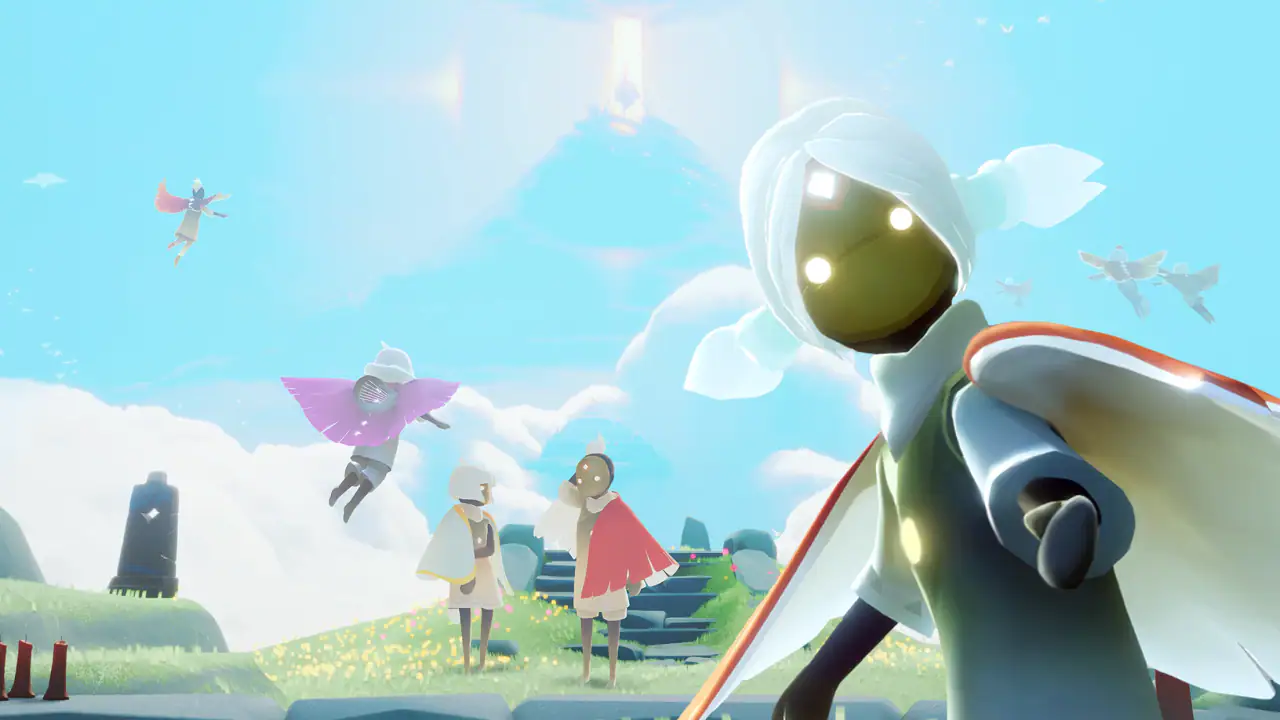
The first thing I noticed is how little pressure the game puts on me. I can move through the environments, look for hidden paths, collect useful light, and follow the story without feeling that every minute must be optimized. The world is arranged like a sequence of connected realms, and each one has its own mood. Some areas invite careful searching, while others are more open and scenic. The simple act of gliding from one place to another is often the reward.
Movement is central to the experience. I spend much of my time running, jumping, flying, and learning how to use the landscape more efficiently. Flying is not just a visual flourish; it changes how I read the environment. A high ledge, a distant structure, or a gap that first looks unreachable may become accessible after I understand the available routes. That gives exploration a pleasant sense of discovery without turning the game into a punishing platformer.
The role-playing layer is deliberately light. I am not managing a complicated inventory full of weapons, armor, and statistics. Instead, progression is tied to exploring, helping spirits, collecting resources, and unlocking expressive options. This keeps the interface approachable, especially on a phone, but it also means players who want detailed character builds may find the system thin.
Related News

Why WhatsApp Messenger Still Makes Everyday Communication Feel Easy

Jurassic World: The Game Is the Better Dino Tycoon for Strategic Players

Threads in Real Life: Who Should Join, Lurk, or Leave

How SHEIN Turned Shopping Into an Endless Content Feed

How to Make Fortnite Feel Smarter on Mobile

Should You Switch to Microsoft Outlook on Mobile?
The social design is where the game becomes distinctive. Other players appear in the same spaces, but interaction begins in a restrained way. I can acknowledge someone, follow them, offer help, or communicate through gestures rather than immediately exchanging personal details. That creates a useful middle ground between playing alone and joining a conventional multiplayer lobby. I can share a moment with a stranger and then continue on my way without the awkwardness of a forced conversation.
I especially like this when I am tired after work. On a typical evening, I might spend a short session revisiting a familiar area, gathering what I need, and helping another player reach a difficult spot. There is no need to assemble a team in advance. If someone is nearby, cooperation can happen naturally. When I want a more focused session, I can explore alone and treat the other players as part of the atmosphere.
The game is free to start, which makes trying this style of multiplayer exploration easy. Optional purchases range from $0.99 to $49.99 per item, so I would advise new players to first understand what they actually enjoy before spending. The most satisfying parts of my time with Sky came from learning the world and building routines, not from buying every available cosmetic option.
Gallery
A calmer kind of multiplayer
Sky is often described through its peaceful tone, but the important detail is how that peace is constructed. It does not simply remove conflict and hope the result feels relaxing. It gives me activities that make quiet play meaningful: finding a hidden route, returning to a place with a new ability, recognizing a recurring player, or coordinating a flight with someone I have just met.
That design also affects how I think about progress. In many online role-playing games, progress is visible through damage numbers, equipment tiers, or increasingly difficult enemies. Here, progress feels more personal. I become better at reading the environment and more comfortable with the movement system. I also learn which areas are worth revisiting and how to use gestures to communicate efficiently.
One useful tip is to resist rushing through the first visit to a realm. The obvious path is rarely the whole experience. I found that looking upward, checking the edges of platforms, and watching where other players travel often revealed more than following the most direct route. The game rewards curiosity, but it does not always announce that a side path is worth investigating.
Another practical habit is to treat short sessions as worthwhile. I do not need a free afternoon to enjoy the game. A brief visit can be enough to complete a small objective, practice flying, or reconnect with a friend. This makes it a better fit for people who prefer steady, low-pressure play than for players who expect every session to deliver a major story chapter or a dramatic boss encounter.
What the current version means for returning players
The current version is 0.32.2 (365939), and the game has been available since April 6, 2020. Those details matter because Sky is not a brand-new experiment waiting to prove its basic idea. It has had time to establish its identity as a long-running online world, and its large player base reflects that staying power. The game has more than 10 million installs, with an average rating of 4.5 from around 1.1 million ratings.
For an existing player returning after a break, I would approach it as a living routine rather than a conventional sequel-like experience. The core appeal remains the combination of exploration, social gestures, and atmospheric travel. You may need a little time to remember routes and progression habits, but the controls are approachable enough that returning does not feel like relearning a complicated combat system.
The version number also suggests a product that is still being refined rather than presented as a finished, static package. I would separate that observation from any promise about future additions: a current version tells me where the game stands now, not exactly what will arrive next. What I can say from playing it is that the foundation is coherent. Its movement, world design, and social interactions all support the same relaxed purpose instead of pulling in unrelated directions.
New players should know that the peaceful presentation does not mean every moment is effortless. Some discoveries require patience, and navigation can occasionally feel vague when I want a clear instruction. The game expects me to observe and experiment. That is rewarding when I am in the right mood, but frustrating when I simply want to know what to do next.
The age rating is Everyone 10+, which fits the accessible presentation while acknowledging that the experience is aimed beyond very young children. I would still encourage parents to look at the online nature of the game and decide whether its social format suits their family. The communication style is gentler than in many multiplayer titles, but it is still a shared online environment.
The small skills that make exploration easier
My first non-obvious lesson was to watch other players without assuming they are only background decoration. A player who suddenly changes direction may have noticed a collectible, a hidden opening, or a useful route. Following for a moment can teach me the layout faster than wandering randomly. Of course, I should not expect every player to be acting as a guide, but the community itself can become part of the environmental storytelling.
My second lesson was to use gestures as a practical language, not only as decoration. A greeting can begin an interaction, while a repeated action can communicate intent when neither player is using words. This is especially helpful when I want to cooperate briefly without committing to a long social session. The limited communication style can feel restrictive, yet it also keeps encounters from becoming noisy or intrusive.
My third lesson was to separate collecting from sightseeing. On a first visit, I prefer to understand the shape and mood of an area. On a later visit, I can focus on a route and gather what I missed. Trying to do both at once made me overlook scenery and still miss hidden objectives. Splitting those goals makes the game feel less like a checklist and more like a place I am learning over time.
There is also a useful trade-off in the game’s visual style. The soft colors, open skies, and flowing animation make the world inviting, but they can sometimes reduce visual clarity. A distant object may blend into the scenery, and a route that looks obvious from one angle may be confusing from another. I found that adjusting my camera and pausing to observe helped more than moving faster.
On a phone, this matters because touch controls leave less room for precision than a physical controller. Sky is designed to remain playable with touch input, but players who are very sensitive to camera movement or platforming accuracy may need an adjustment period. I would not choose it specifically for demanding technical controls. I would choose it for the feeling of traveling through the world.
Where it differs from other role-playing games
Compared with action role-playing games, Sky gives up combat depth in exchange for atmosphere and cooperation. There are no long equipment comparisons dominating my attention, and I am not constantly measuring whether a new attack is stronger than the previous one. That makes the game easier to enter, but it also reduces the sense of mechanical mastery that keeps some players engaged for hundreds of hours.
Compared with traditional massively multiplayer games, it is much less demanding socially. I do not need a fixed guild, a headset, or a carefully scheduled group to experience its central idea. This is one of its best qualities for casual players and people who feel uncomfortable in competitive online spaces. The trade-off is that the relationships can feel fleeting unless I deliberately invest in them.
Compared with cozy single-player games, Sky offers a stronger sense of shared presence. Seeing another person glide through the same landscape can make the world feel alive in a way that computer-controlled characters cannot fully reproduce. However, a single-player alternative may be better if I want complete control over the pace, story order, and privacy of every session.
I would also avoid recommending it to someone who needs a clear ending and a tightly directed campaign. The experience is more cyclical and exploratory. Returning to familiar places is part of the appeal, not a sign that the game has failed to provide enough content. Still, players who measure value mainly by plot twists, combat encounters, or a large amount of dialogue may come away disappointed.
Everyday use, spending, and long-term appeal
For everyday use, I see three strong scenarios. The first is a short decompression session after a stressful day. The second is a low-pressure activity with a friend who does not enjoy competitive games. The third is a shared world for someone who likes collecting and exploration but wants occasional human contact without constant conversation.
The free entry point helps with the first decision: I can test whether the movement and social rhythm suit me before committing money. The in-app purchase range deserves attention, though. Cosmetic customization and optional items can be tempting, especially when the game’s visual identity makes personal expression feel important. I would set a personal budget before browsing purchases, because the gentle atmosphere does not eliminate the usual temptation to spend on digital extras.
One question many players have is whether they need friends before starting. In my experience, no. The game works when I enter alone, and spontaneous encounters are part of its design. Having friends can make the experience more consistent, but the absence of a pre-existing group is not a barrier to trying it.
Another question is whether it is suitable for someone who dislikes online games. My answer is: sometimes. If the dislike comes from voice chat, competitive pressure, or aggressive matchmaking, Sky may be a refreshing exception. If the dislike is about seeing any other players or depending on an internet-connected world, a fully offline game would be a better choice.
Players also ask whether the game is relaxing all the time. I would not promise that. Searching for a missed objective, navigating an unclear area, or trying to coordinate movement can become tiring. The calm mood is real, but it works best when I accept the game’s pace instead of treating it like a conventional progression race.
What I would like returning players to watch
When I look at the game’s evolution, I pay attention to how new material fits the original rhythm. The strongest additions would be those that deepen exploration, expressive communication, and reasons to revisit the world without turning the experience into a noisy competition. I would be cautious about judging future expectations as guarantees; the current version is evidence of the present product, not a promise about its next direction.
Existing players should watch for changes that affect routine: whether familiar areas remain rewarding, whether social encounters stay comfortable, and whether optional purchases remain separate from the reasons to play. Those are more important to me than a long list of additions. Sky succeeds when its systems continue to support curiosity and connection rather than distracting from them.
New players should watch their own response to repetition. If revisiting places, collecting gradually, and improving through observation sounds satisfying, the game has a good chance of becoming a regular favorite. If you need constant novelty, escalating challenge, or visible power growth, its slower structure may feel empty after the initial beauty fades.
My final recommendation is positive but specific. Sky: Children of the Light is best approached as a peaceful online place, not as a conventional combat RPG. I enjoy it most when I have a little time to wander, notice details, and share a quiet task with someone I may never meet again. Its limitations are clear: touch movement can take patience, goals are not always obvious, and the light progression will not satisfy build-focused players.
Even so, the combination of graceful travel and low-pressure human connection remains unusual. With a 10M+ install base and roughly 33K reviews, it is clearly not a niche experiment that only a handful of players understand. I would recommend the free game to anyone curious about a gentler form of multiplayer, while suggesting that competitive players and fans of deep combat look elsewhere. For me, its value comes from making a small amount of time feel shared without demanding that I turn the session into an event.
It runs on Android 8.0 or later, carries an Everyone 10+ rating, and is free to begin. Those practical details make it easy to try, but the real decision is emotional: do you want a game that asks you to explore quietly, communicate indirectly, and let progress unfold? If the answer is yes, this is one of the few role-playing experiences I would genuinely recommend to a friend who wants something calm, beautiful, and quietly social.
FAQs for Sky: Children of the Light
What is the main objective of Sky: Children of the Light?
Sky: Children of the Light is an adventure game where players explore a beautifully crafted kingdom to uncover mysteries, help lost spirits, and restore fallen stars to their constellations. The main objective is to spread light across the kingdom by connecting with others and progressing through various realms.
Can Sky: Children of the Light be played offline?
No, Sky: Children of the Light requires an internet connection to play. The game’s social elements, such as interacting with other players and real-time events, rely on online connectivity. This ensures a dynamic experience where you can meet and collaborate with players from around the world.
Is Sky: Children of the Light suitable for children?
Yes, Sky: Children of the Light is designed to be family-friendly. It features a gentle gameplay experience with no violence, focusing instead on cooperation, kindness, and exploration. The game’s beautiful visuals and soothing soundtrack make it appealing to players of all ages, including children.
Are there in-app purchases in Sky: Children of the Light?
Yes, Sky: Children of the Light offers in-app purchases. Players can buy seasonal passes, cosmetic items, and other enhancements. While these purchases can enhance the gameplay experience, they are optional and not necessary to enjoy the game’s core content and progression.
What platforms is Sky: Children of the Light available on?
Sky: Children of the Light is available on multiple platforms, including iOS, Android, Nintendo Switch, and PlayStation. This cross-platform availability allows players to enjoy the game on their preferred device, ensuring a wide reach and the ability to connect with a diverse player base.
Pros
- Stunning visuals and soothing soundtrack.
- Engaging cooperative multiplayer experience.
- Frequent updates with new content.
- Simple
- intuitive controls.
- Innovative social interaction mechanics.
Cons
- Requires constant internet connection.
- Some in-app purchases can be pricey.
- Occasional server connectivity issues.
- Gameplay can feel repetitive.
- Battery drains quickly on high settings.


